Would You Know if You Had a Problem With Your Fallopian Tube
Blocked fallopian tubes are one possible crusade of female person infertility. There are usually no symptoms, but there are some hazard factors that can increment the take a chance of developing the status. The medical term for a blocked fallopian tube is tubal occlusion.
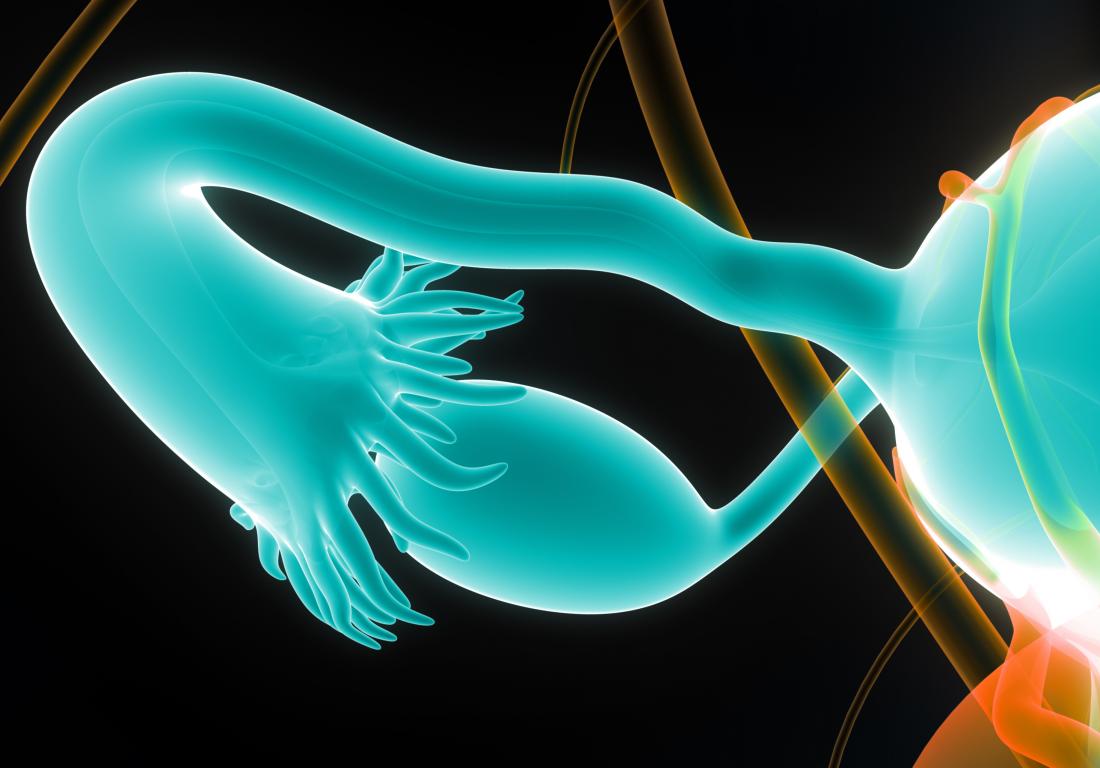
The fallopian tubes are muscular tubes that are lined with frail hair-like structures. These "hairs" work in both directions; helping an egg to travel from the ovaries downward to the womb (uterus) and helping sperm travel up from the womb.
Each fallopian tube ends in fimbriae, which are finger-like structures. The fimbriae catch and guide an egg when the ovary releases it.
The fallopian tubes play an important role in conception because they are where most eggs are fertilized.
If any office of the fallopian tube is damaged, for example by surgery or an infection, they tin can become blocked by scar tissue.
Blocked fallopian tubes do not often nowadays symptoms other than difficulty conceiving. Doctors typically class this as having tried to conceive for
A blocked fallopian tube may cause some women to experience symptoms such equally pain in the pelvis or belly. This pain might happen regularly, such every bit around the fourth dimension of their period, or be abiding.
Sometimes, a blockage in a fallopian tube can cause a fertilized egg to get stuck. This is known as an ectopic pregnancy.
An ectopic pregnancy may non always cause symptoms and is ordinarily detected during a scan. Still, some woman may experience signs of pregnancy, such equally stomach pain on i side of the body, or vaginal bleeding. Any woman who suspects she has an ectopic pregnancy should seek immediate medical attention.
Fallopian tubes can become blocked for a range of reasons, which include:
- a history of pelvic infection
- a previous burst appendix
- having had a sexually transmitted disease, such every bit gonorrhea or chlamydia
- endometriosis, a status that causes the lining of the womb to grow outside of the uterus
- history of abdominal surgery
- hydrosalpinx, which is swelling and fluid at the cease of a fallopian tube
All of these conditions can affect the fallopian tubes directly or this area of the body. In nigh cases, these conditions or procedures create scar tissue that can block the tubes.
The female reproductive system is fabricated up of the ovaries, uterus, and fallopian tubes.
If a medical problem has affected any of these 3 areas, it may make getting pregnant more hard.
Each of the 2 ovaries is connected to the uterus by a fallopian tube. The ovaries shop eggs and release them randomly, with ane ovary releasing an egg each month.
For example, the right ovary might release an egg for 3 months in a row, and then the left ovary might release an egg the following month.
If one fallopian tube is blocked, it may even so exist possible for an egg to be fertilized. If both are blocked, this is less probable.
Blocked fallopian tubes tin be difficult to identify. The tubes can open and shut, so it is not always piece of cake to tell if they are blocked or only closed.
In that location are three key tests to diagnose blocked fallopian tubes:
- An X-ray examination, known as a hysterosalpingogram or HSG. A md injects a harmless dye into the womb, which should flow into the fallopian tubes. The stain is visible on an 10-ray. If the fluid does not menstruum into the fallopian tubes, they may have a blockage.
- An ultrasound test, known as a sonohysterogram. This is very similar to the HSG test but uses sound waves to build up a pic of the fallopian tubes.
- Keyhole surgery, known every bit a laparoscopy. A surgeon makes a small cut in the body and inserts a tiny camera to take pictures of the fallopian tubes from inside.
A laparoscopy is the most accurate test for blocked tubes. However, doctors may not recommend this test as an early diagnosis because information technology is invasive and cannot care for the issue.
A doctor may exist able to advise a possible diagnosis based on medical history. For case, a adult female may have had a outburst appendix in the past. If the woman has had difficulty conceiving, this could suggest blocked fallopian tubes equally a likely cause.
It may be possible to open blocked fallopian tubes surgically. Yet, this depends on the extent of the scarring and where the blockage is.
Surgery aims to open the fallopian tube using one of the following methods:
- removing scar tissue
- making a new opening on the outside of the fallopian tube
- opening the fallopian tube from the within
Most surgeons will conduct out the procedure using keyhole surgery.
Surgery aims to open up the fallopian tubes to ameliorate a adult female's chance of conceiving. Whether or not a woman will be able to conceive after surgery is affected by:
- her age
- the health of her partner's sperm
- the level of fallopian tube damage
If surgery is unsuccessful, a doctor may recommend in vitro fertilization (IVF). IVF involves placing fertilized eggs directly into the womb, which means that the fallopian tubes are not involved in pregnancy.
Surgery to open up the fallopian tubes carries the same potential complications as whatever surgery. These include:
- infection
- creation of more scar tissue
- damage to organs
- haemorrhage
However, keyhole surgery is relatively low-risk.
One risk of pregnancy after surgery is an ectopic pregnancy, significant that a fertilized egg gets stuck outside of the womb, often in a fallopian tube. The egg will not develop, and there can be a risk to a woman's health.
Women who take tubal surgery should meet a doctor as soon as they observe they are pregnant to cheque for an ectopic pregnancy.
When planning a pregnancy, it can be a good idea for a person to recall nearly their medical history. This can include hazard factors for blocked fallopian tubes, such as whether a woman has had surgery in this area of her trunk or a relevant infection. These considerations may help to diagnose a possible crusade of infertility.
The outlook for fertility is considered to be reasonably good if only one tube is affected or scarring is minimal. If surgery to treat blocked fallopian tubes is not successful, IVF might be an option.
Source: https://www.medicalnewstoday.com/articles/321419
0 Response to "Would You Know if You Had a Problem With Your Fallopian Tube"
Post a Comment