Why this Michelin star chef spends so much time on Singapore farms
Recently, Labyrinth hosted a tabular array of local vegetable farmers, giving them the full weight of its Michelin-starred experience. The urban farmers, who tend crops at Edible Garden City, weren't very much accustomed to fine dining. But they were pretty much the VIPs that night and, in fact, every dark at Labyrinth – as they are the people who supply the restaurant with its herbs, flowers and vegetables.
When a chef puts food on a plate, information technology's the final step in a journey that begins at the source. Many chefs showtime their day at the market or placing orders online – but for Labyrinth'due south chef-possessor LG Han, his market place consists of farms all over Singapore.
From seafood kelongs to a quail farm, a goat'due south milk dairy and more, the 34-year-old makes it a point to visit the network of local farmers he works with on a regular basis.
That was why it was important to him to have Edible Garden City's farmers over for dinner – in the spirit of exchange and agreement.
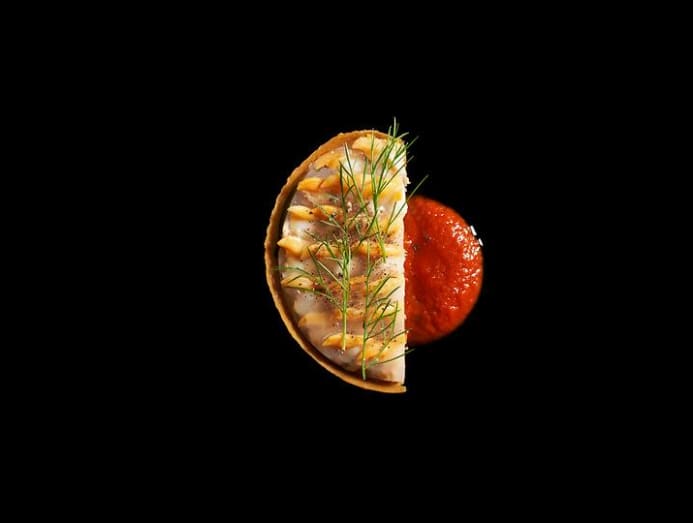
Labyrinth is the only restaurant in Singapore where xc per cent of the food is locally sourced, and the menu, which currently includes dishes similar Local Wild-Caught Crab with chilli crab water ice cream, Pulau Ubin Oyster Takoyaki and a lala mollusk tart, aims to cleave out a truly Singaporean cuisine.
UNDERSTANDING AND RESPECT: PEOPLE, PLACES AND Surround
It'southward been v years since the restaurant opened, but it's only in the terminal year or so that Han has moved away from novelty-factor dishes such as Chendol Xiao Long Bao (served in a dim sum steamer with "vinegar" that'south actually gula melaka syrup) towards a bill of fare designed around local produce.
That came well-nigh simply when regular customers who introduced him to local farmers. "I was really impressed with what I found locally (and) I wanted to find out more. It just snowballed – and so I managed to find quite a big number of sources," he recounted.
Beyond food and how it tastes, "Information technology'south also almost understanding our environment – how things abound here, why are they different, the seasons in Singapore – monsoon flavour; the hot and dry season. Then, information technology'south non only about using local so walking around with a flag saying, 'I'grand using local, hey, support me.' It's also actually nearly digging deep to larn almost our environment, our terroir, likewise every bit to understand how the farmers grow things. And from in that location, we tin create dishes that hopefully exercise justice to the hard work of the farmers," he said.
For case, Edible Garden Metropolis supplies the eatery with about 20 herbs, flowers and vegetables. "Nosotros utilise herbs like the oyster plant and Wandering Jew as office of a shaved ice dessert. And nosotros take a rojak dish that is a salad of 14 types of herbs and vegetables – most of information technology comes from here," Han said. "Even herbs that are not native to Singapore – when they grow here, they sense of taste unlike, if the weather condition are right."
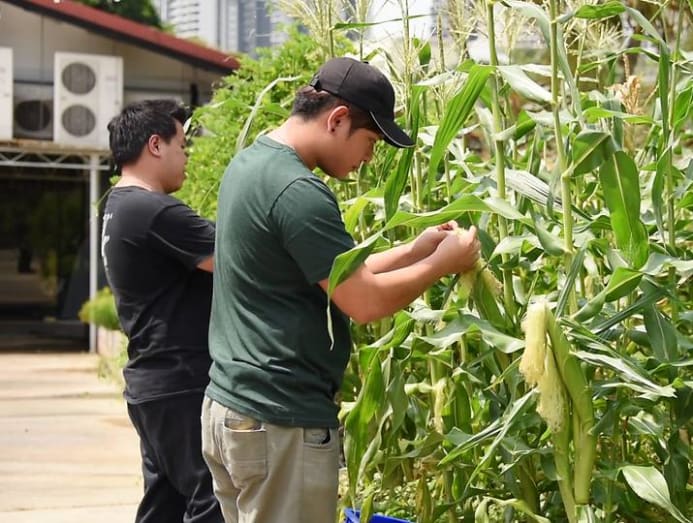
The most important element, he stressed, is the relationship he builds with the farmers. Sidney Chua, Edible Garden City's Head of Sales (Production), says Han has never asked for a list of products. "He just comes down hither and says, 'I want this; I want this."
That modus operandi has resulted in a sweet corn that is grown specially for the restaurant.
"Sid taught me that the time frame from farm to kitchen is crucial in determining the sweetness level and the wet of the corn," Han said. "In this instance, aye, peradventure a corn farm overseas might exist great besides, but when you import the corn, it's just not as sweet any more. Sometimes, y'all have to expect at produce in the context of, 'Is it better not just comparatively effectually the world, simply is it ameliorate than what we can become in Singapore?' Things like corn, strawberries, herbs and microcress – they look alive when you get them imported, only the flavour has gone apartment."
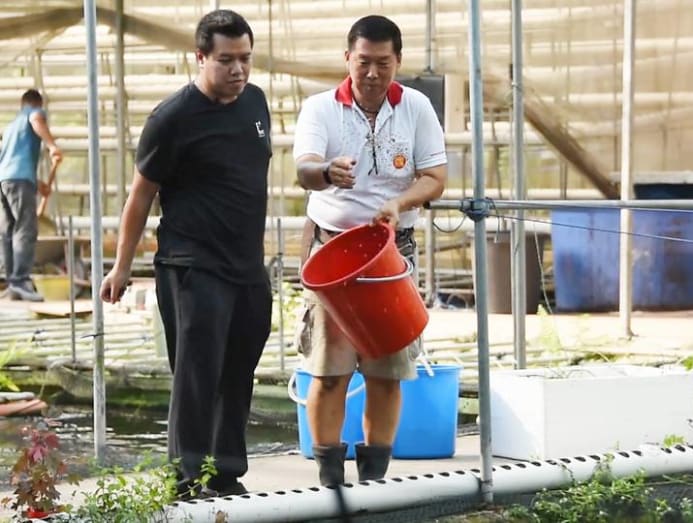
It is the aforementioned for seafood, which is why Han chooses to serve a dish of locally bred silver perch. He makes regular visits to Nippon Koi Subcontract, also known as Nippon Fish Farm Trading, in Choa Chu Kang, which breeds fish for food in addition to ornamental koi.
Managing director Pay Bok Sing, known simply as "Ah Sing", is the only farmer in Singapore who has managed to observe a way to brand the notoriously hard silver perch thrive here. He'due south adamant about breeding the fish in make clean water, without antibiotics or chemicals. And equally part of his tender care, he feeds them cooked eggs for breakfast and sweetness potato leaves for supper. This sits well with Han, to whom it's important that the fish he serves is well nourished and complimentary of harmful substances.
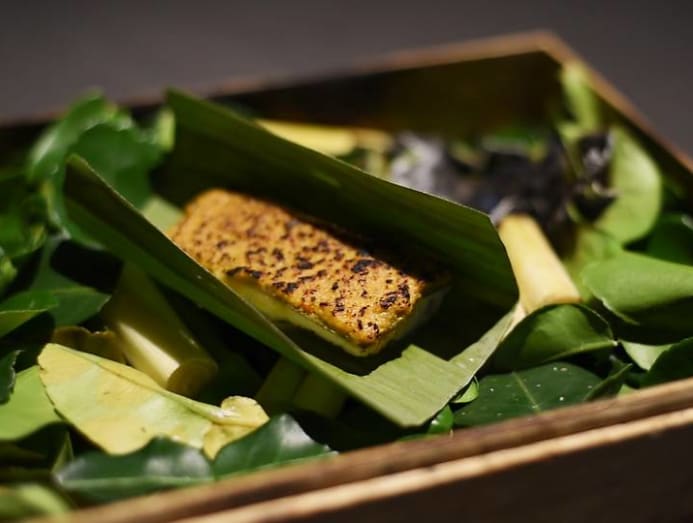
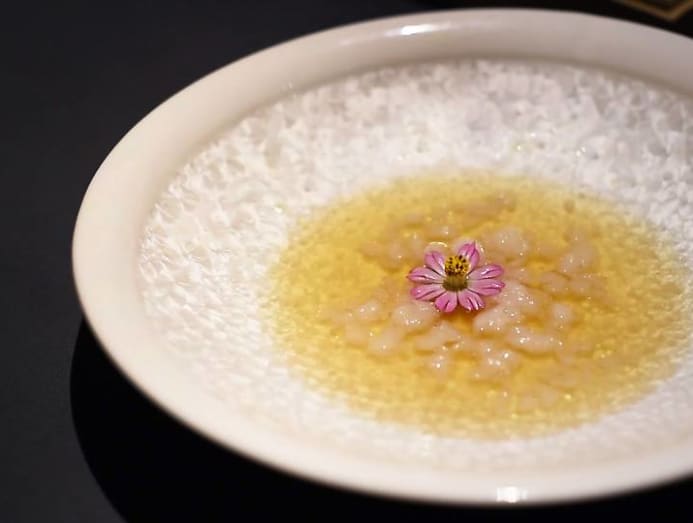
Ah Sing says he likes working with Han because while Chinese restaurants will just take big fish of a certain size, Labyrinth uses smaller ones. That'south good for business and also good for sustainability. And, quipped the farmer, "He's like me. He's not agape of a challenge."
REDEFINING SINGAPORE CUISINE
The quest for a truly Singaporean cuisine can indisputably be called a challenge, merely it's i that Han feels is necessary to undertake.
"If I am cooking Singapore cuisine, whether it's 'modern Singapore', 'archetype Singapore', 'rustic Singapore', whatsoever – the produce has to come from Singapore. The people, the ingredients, the flavours – all these take to flow. That'southward the only way to create a truthful Singapore cuisine; one that's non fusion," he said. "What I'd like to present and share with the diners, from local diners to diners from around the world, is the people growing the produce, the stories behind them. It's just my way of defining what Singapore is."
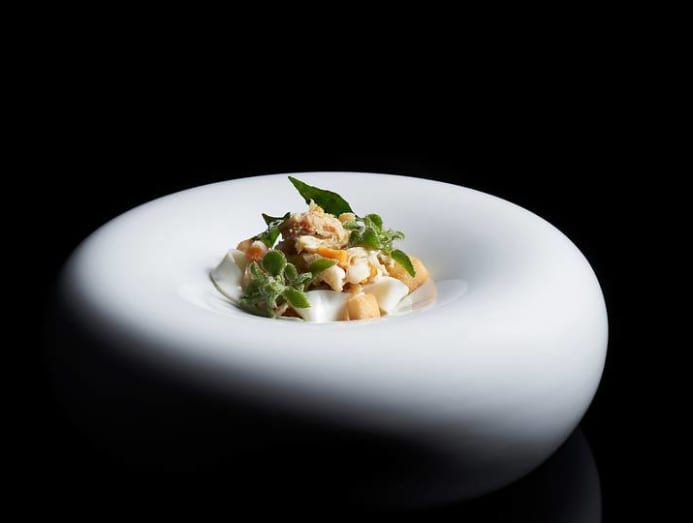
At that place is a merchandise-off to using so much local produce, though. "People expect the cost to be lower because information technology'south local," he said. "Really, the toll is the same." That's because the farmers he works with are generally modest producers who practise things the natural style, without chemicals or fertilisers, and are subject to the vagaries of the seasons. That's on top of the high costs of land, manpower and operations in Singapore. But it's better because the nutrient is better."
Han is assured of the quality of his ingredients, he said, considering he'due south personally witnessed responsible farming methods. "That also results in healthier and cleaner produce – something the world, I call up, is sorely lacking these days."
Why don't more chefs use more than local produce, then? "They don't bother finding out virtually information technology," he opined. "Singapore has been marketed every bit a land with zero output on agriculture and everything imported from overseas. Secondly, we tin can become produce easily from Japan, Europe, Australia, the USA – whatever time we snap our fingers. Immature cooks these days are lazy. They've never interacted with a farm. All they know is picking upwardly the phone and calling a supplier."
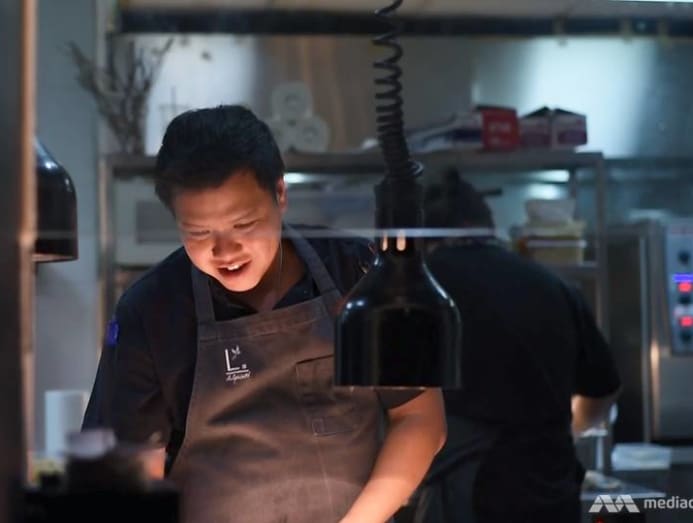
On the other hand, he conceded, there are limitations. "If you lot are a French eatery, you'll have to serve French food; if you're a Japanese restaurant, you must serve Japanese seafood. That means you lot tin can't really go local, in a sense," he said.
"Also, when you think about it, at that place aren't many of united states (local chefs) helming our own restaurants. Many of the younger students these days coming in through the schools are existence taught the French syllabus and when they work in Singapore they end up working with non-local chefs, in kitchens that don't have the exposure or knowledge about what goes on in Singapore, although that's changing a bit."
The bottom line is, "They have to see the farm itself. They've got to erase that perspective that any is local is inexpensive, or should be cheap, and is inferior to whatever's happening in Nihon, Commonwealth of australia, French republic. I e'er believe in that location's no such matter equally bad produce if it'southward grown properly. There'due south no such thing as a bad office (of an fauna) as well – it'southward about how we use and apply it. But at that place is such a thing as a bad chef."
NEXT-LEVEL CORN
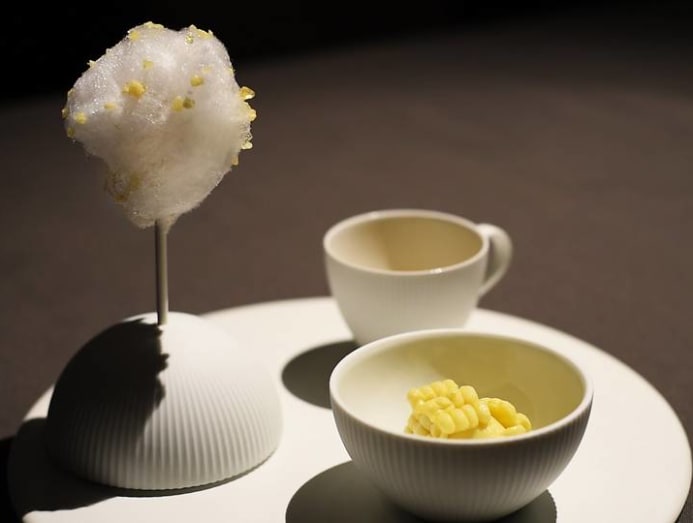
And and then, when Edible Garden Metropolis's farmers dined at Labyrinth, information technology was a rewarding experience for all involved.
When Chua saw the corn he had grown transformed into a dessert named Pasar Malam – corn spun into cotton candy; a "loving cup corn" of sorbet, goat milk butter and gula jawa-salted egg popcorn; and corn husk tea – it was "really mindblowing", he said. "I thought corn was astonishing on its own, but Han was able to take it to the adjacent level. To us, information technology was very of import considering we farm all day and we don't really know how our produce is turned into magic."
On Han'south part, as he spends time with the farmers, "You run into the hard piece of work involved. Respect comes into it. Sometimes, attempt and outcome are not proportionately scaled. I just feel that they can charge more. But I'm the merely one who is willing to pay more," he said. "I don't care (nearly the price). It'southward skillful, it's fresh and I trust them – that's all I care nigh."
He added, "Information technology's not just near wanting to go local – it's about having that drive to understand how ingredients are grown, and well-nigh having respect and social responsibility towards the environment, towards customers, and towards the food that you lot produce for them. That's what it should be."
Labyrinth is at Esplanade – Theatres on the Bay, eight Raffles Avenue #02-23
Source: https://cnalifestyle.channelnewsasia.com/dining/labyrinth-chef-lg-han-local-farm-produce-250876
0 Response to "Why this Michelin star chef spends so much time on Singapore farms"
Post a Comment